Pan knowledge
What makes a good pan
How pans are coated, what a good base is made of and why the handle has to do more than you might think.
Coating methods
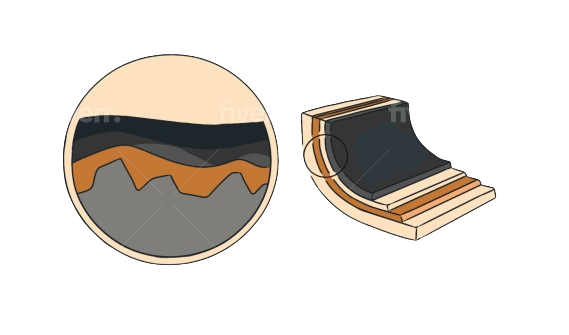
Not every coating is the same
Roller coating
Curtain coating
Spray coating
Materials and their structure
The right frying pan can make the difference between a great meal and a culinary disaster. A modern frying pan stands out for its material composition: the base consists of three perfectly matched layers.
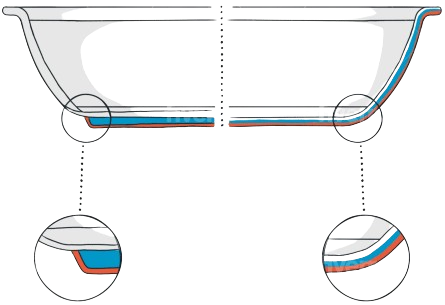
An aluminium layer transfers heat efficiently from the hob to the pan, while a magnetic core lets it heat up on induction. The body is made of chrome-nickel steel for acid resistance. Together, they form the so-called sandwich base.
Multi-ply up to the rim
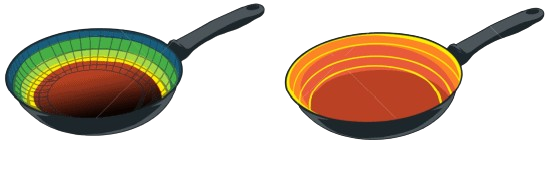
It gets even better: in multi-ply pans, the layered structure continues up the walls. The heat spreads more evenly across the whole pan, and on induction a larger area heats up.
Such a pan heats up faster and can be controlled more precisely, which makes frying child’s play. Our pan test shows the different types of construction.
Pan handles
Did you know what a “flame guard” is, or that a metal handle is always hollow inside?
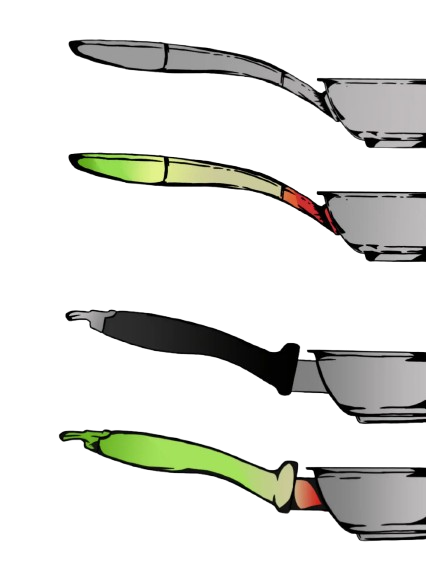
The handle is an essential part of a frying pan – and all too often it starts to wobble, bend or melt. A good handle is durable, stays cool, is oven-safe if needed, protects against flames and sits comfortably in the hand. There are essentially two ways to build one:
- Plastic, wood or bamboo handles are screwed to the pan with a hollow metal piece. This slows heat conduction and prevents fires, especially on gas hobs. This part is often neglected when cleaning – at RePan, it gets polished.
- Metal handles usually last longer but conduct heat very well. To keep them from getting too hot, they are at least partly hollow. They are usually riveted, and we are happy to tighten the rivets after a pan’s first life.
In short
Pans are too good to throw away
- Pans contain a lot of know-how, design and valuable material.
- Recoated pans are at least as good as new ones, sometimes even better.
- The material doesn’t have to be shredded, melted and reshaped: this saves massive resources and creates value in the region.
Frequently asked questions
Reusable box
The most convenient way to recoat
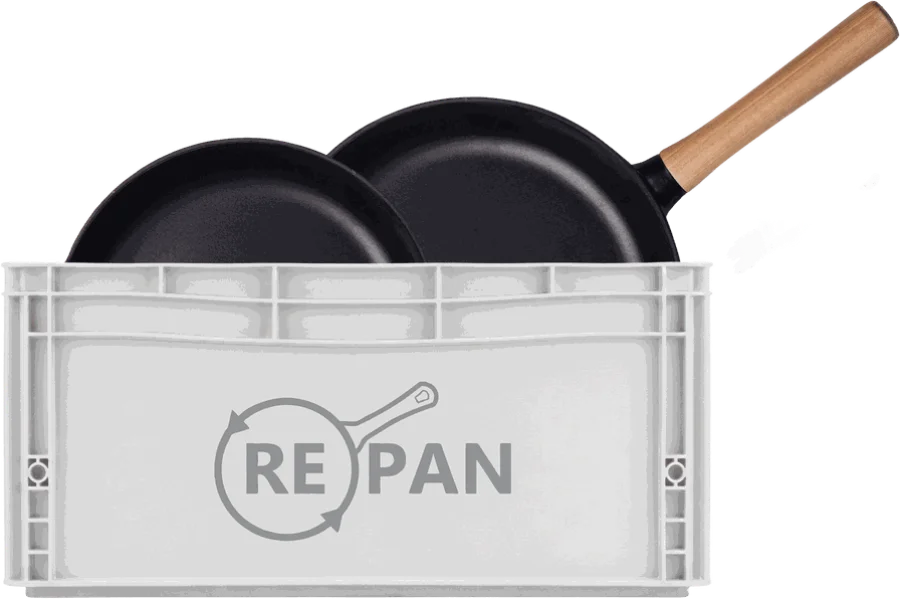
We send you a prepaid reusable box. Fill it with everything that needs recoating and simply leave the box at your front door.
Request a box